








Best Gas Type for Every Jeep Wrangler Engine
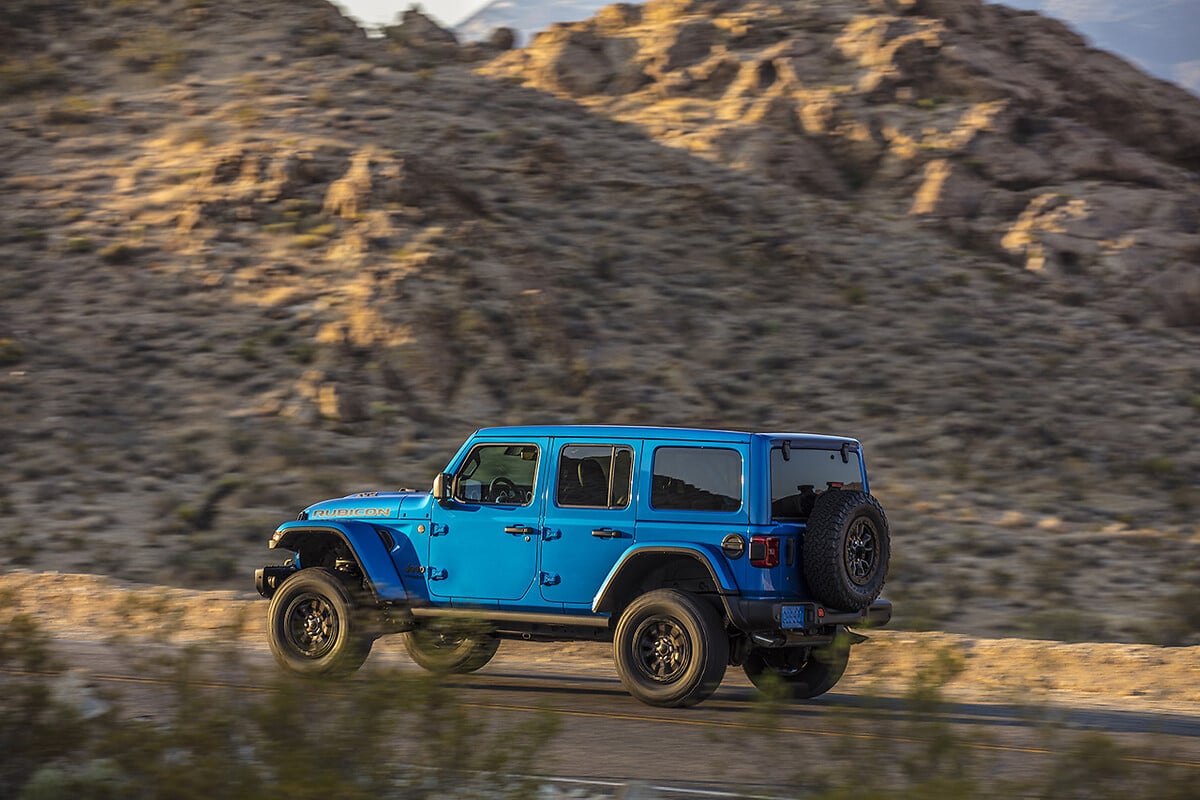
Photo Credit: Jeep
What Type of Gas Do Jeep Wranglers Take?
When fueling up for daily commutes or preparing for an off-road trek, knowing exactly what type of gas do Jeep Wranglers take is essential for maintaining performance, protecting your engine, and getting the best value at the pump. While many drivers assume all SUVs require standard regular unleaded, the correct fuel grade depends heavily on the specific engine under the hood.
Do I Need Premium Gas for a Jeep Wrangler?
Whether you need premium gas for a Jeep Wrangler comes down to your vehicle’s factory engineering rather than a single across-the-board rule. For most modern Wranglers, regular 87-octane unleaded gasoline meets all factory specifications and emissions standards, meaning you can safely run standard fuel without causing damage. However, premium gasoline (91 octane or higher) is recommended or required for turbocharged, hybrid, and high-performance V8 trims to reach their full rated horsepower and efficiency potential. Filling up with lower octane won’t ruin a base engine, but running regular in models calibrated for higher compression can force the ECU to retard timing, slightly dampening your throttle response.
Which Wrangler Engines Prefer Which Fuel?
Understanding what type of gas do Jeep Wranglers take requires looking at each available powertrain individually. The standard 3.6L Pentastar V6 engine is naturally aspirated and explicitly engineered to perform best on regular unleaded 87-octane fuel. Conversely, the 2.0L Turbocharged inline-4 engine and the plug-in hybrid Wrangler 4xe (which uses the same 2.0L turbo block) can run safely on 87 octane, but factory guidelines recommend 91 octane or higher for optimal forced-induction performance. If you drive the high-performance Rubicon 392 powered by a 6.4L HEMI V8, premium 91+ octane is strictly required to prevent engine knock under high load.
Regular vs. Premium: What Difference Will You Feel?
When comparing regular versus premium fuel in a Jeep Wrangler, the driver-perceived difference depends almost entirely on forced induction and ambient conditions. In the naturally aspirated 3.6L V6, switching to premium produces zero noticeable seat-of-the-pants difference in acceleration or fuel economy, making higher octane an unnecessary expense. In turbocharged setups like the 2.0L Turbo or 4xe, high octane prevents premature detonation under heavy thermal stress. You will feel a crispness in throttle response, smoother mid-range passing power on highway inclines, and more consistent output during hot summer driving or heavy towing.
Ownership Tips That Maximize Real-World Results
To get the most out of every tank, always cross-reference your owner’s manual or check the label inside your fuel door for factory octane recommendations. Avoid using E85 flex-fuel in standard Wranglers, as fuel containing more than 15% ethanol (E15) can degrade internal fuel lines and fuel system components not designated as Flex-Fuel vehicles. For 2.0L Turbo owners looking to save money, a proven strategy is running regular 87 octane during routine, flat daily commuting, then switching to 91 or 93 premium when trail riding, towing heavy loads, or embarking on long mountain road trips. Additionally, choosing Top Tier detergent gasoline helps prevent carbon buildup on intake valves, ensuring your engine runs clean over thousands of miles.
Frequently Asked Questions
What happens if I put regular gas in a Wrangler 2.0L Turbo?
The 2.0L Turbo engine is equipped with knock sensors that instantly adjust ignition timing when 87-octane fuel is detected. It will run safely without knocking or causing engine damage, though you may experience a slight drop in peak horsepower and fuel efficiency during hard acceleration.
Can I put 87 octane in a Jeep Wrangler Rubicon 392?
No, the 6.4L HEMI V8 in the Rubicon 392 requires a minimum of 91 octane premium gasoline. Using regular 87 octane in this high-compression V8 can cause severe engine knock and potential internal damage.
Is Top Tier gas necessary for my Jeep Wrangler?
While not strictly required, Top Tier gasoline contains higher levels of detergent additives that keep fuel injectors and combustion chambers free from deposits. Using Top Tier fuel regularly helps maintain optimal fuel economy and overall engine health over the lifetime of your Wrangler.